Employee Productivity - See Where Your Resources Go
5 min read
When we talk about employee productivity, the first thought is often “more hours worked.” But that is rarely the real answer.
Productivity improves when people can stay focused, enjoy their work, and know exactly what they are working toward. Focusing on outcomes highlights four key indicators that reveal a team’s true productivity.
Work Focus: Clear expectations help employees stay on task and minimize distractions.
Collaboration: Teams work smoothly and solve problems faster when collaboration is strong.
Employee Well-being: Prioritizing well-being boosts focus, creativity, and consistent performance.
Engagement: Understanding work patterns helps managers support energy and productivity effectively.
What Is Employee Productivity Monitoring
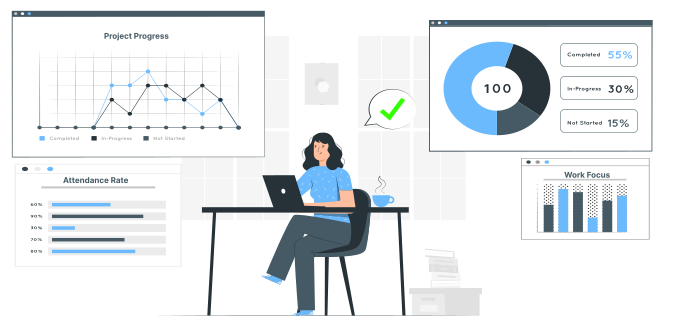
Think of it this way. Just writing your problems down already makes them feel more manageable. Productivity tracking works the same way. When teams can clearly see their productivity metrics, a lot of guesswork disappears.
Productivity metrics and performance dashboards provide essential visibility into work patterns, pinpointing inefficiencies and identifying which efforts truly drive results. This clarity empowers teams to eliminate bottlenecks and make more informed, data-driven decisions.
When tracking focuses on outcomes instead of constant monitoring, it saves time, effort, and money. Managers can plan better, balance workloads, and step in only when it matters. Employees stay focused without feeling watched, which naturally improves performance.
Discover a smarter way to measure & improve productivity
How To Maintain Work Focus For Employees
Maintaining work focus in the workplace comes with the right support systems. Keeping an eye on idle time and distracting apps or websites helps gently steer attention back to meaningful work, without micromanagement.
For remote teams, clear work hour boundaries are essential to avoid constant context switching and burnout. This is where task management and time tracking tools play a big role. By defining goals, prioritizing tasks, and working in focused time blocks, employees know exactly what to work on and when.
The result is a more focused workforce, better output, and a work environment that supports productivity instead of fighting distractions.
Practical ways to stay focused at work by minimizing distractions, organizing your environment & managing your time wisely.
What Is Burnout At Work & How To Recognize It?
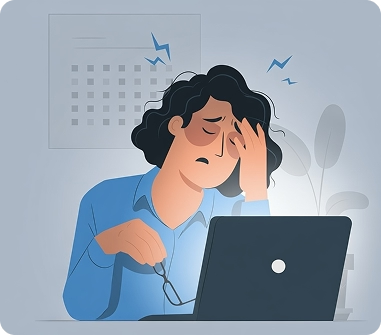
Workplace burnout is a state of physical, emotional, and mental exhaustion caused by prolonged work-related stress, often marked by reduced energy, disengagement from work, and a decline in performance. Burnout often shows up before people speak about it. Common signs include:
Persistent fatigue and low energy throughout the day.
Drop in engagement and motivation.
Reduced participation in team discussions.
Missed deadlines or delayed work.
Declining focus and concentration.
Overcoming burnout
Balanced workloads and realistic expectations help prevent and overcome burnout.
Regular breaks give employees time to rest and recharge.
Open communication encourages early identification of stress and challenges.
Clear role clarity reduces confusion and unnecessary pressure.
Ongoing recognition and support make recovery sustainable and long-lasting.
Work-life Balance : The Essence Of Happiness
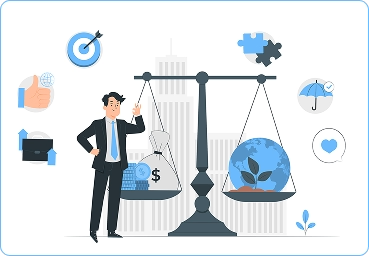
Work-life balance is managing work and personal life so neither overwhelms the other, keeping you productive and healthy.
When people maintain healthy boundaries, they naturally prevent burnout and long term fatigue. Stepping away from work is not a break from progress, it is what restores focus, creativity, and productivity when they return.
A rested mind solves problems faster, thinks clearer, and makes better decisions. But pause for a second, when was the last time you truly logged off without feeling guilty?
Use These Tips to Stay Productive And Balanced
Achieving work-life balance starts with clarity, not longer hours.
Set clear work boundaries and stick to defined hours to switch off without guilt.
Prioritize tasks by impact, not just urgency, to focus energy on what truly matters.
Use productivity tools to organize tasks and make work feel finite, not endless.
Gentle break reminders help reset focus and prevent burnout.
Realistic planning ensures work stays within work hours, protecting personal time.
Companies are adapting hybrid work with clearer boundaries, flexible policies, and technology to help employees maintain a healthier work‑life balance.
Employee Well-Being: Signs That Matter
Did you know that in a global study, only about 29 % of employees say they are thriving at work while more than 70 % report low to moderate wellbeing? That gap shows why understanding workplace well-being matters so much. There are a few clear signals that a workplace supports well-being.
Employee happiness and morale: People enjoy coming to work and feel positive about their day.
Personal growth and skill development: Employees continue learning, improving, and staying motivated.
Fulfillment and purpose: A strong sense of meaning keeps energy and engagement high.
Work-life balance and low burnout: Healthy boundaries lead to higher productivity and satisfaction.
This is where modern tools quietly add value. By turning these indicators into actionable AI insights, employees can reflect on their own patterns, understand how they are evolving over time, and course-correct when needed. At the same time, teams benefit from continuous, 24x7 support that encourages awareness, balance, and long-term well-being rather than reactive fixes.
Why Is Collaboration Important In The Workplace
Collaboration matters because work moves faster and feels lighter when ownership is shared. Teams solve problems quicker when ideas flow freely, not in silos. Regular knowledge sharing also helps people learn from each other, especially across teams, which improves overall capability. Over time, consistent collaboration builds trust, strengthens engagement, and creates a sense of collective responsibility rather than isolated effort.
Curious how productive your workplace really is? Try PPLIO now.
Understand patterns, spot gaps, and improve productivity with confidence.