Measuring employee engagement isn’t about chasing a single score, it’s about understanding how people feel and how they show up at work.
Most organizations start with employee engagement surveys and pulse surveys to capture feedback on motivation, communication, and job satisfaction.
Simple metrics like eNPS (Employee Net Promoter Score) also help gauge loyalty and whether employees would actually recommend the company as a place to work.
Beyond surveys, engagement becomes visible in everyday behavior. Productivity trends, absenteeism, collaboration levels, and turnover rates often reveal how engaged employees really are.
Why Employee Engagement Surveys Fail
Employee engagement surveys often don’t work because they feel disconnected from real action. When surveys are too long, too infrequent, or ask generic questions, employees experience survey fatigue and stop responding honestly.
Add to that a lack of employee trust, especially when feedback disappears into a black box, and engagement survey effectiveness drops even further.
Another common issue is timing. Annual surveys provide delayed feedback, which means problems are identified long after they’ve already affected morale or productivity.
Without follow-up conversations or visible changes, surveys become just another checkbox exercise, highlighting one of the biggest employee engagement challenges organizations face today.
Confusing surveys lead to confusing engagement data.
The gaps in engagement surveys
Low response rates reduce the reliability of engagement data and skew results.
Biased survey responses can occur when employees fear a lack of anonymity or possible consequences.
Many surveys are one-size-fits-all, failing to reflect team-specific or role-based challenges.
Results often lack context, making it difficult to turn feedback into actionable insights.
What KPIs Truly Demonstrate Staff Engagement
Work Patterns and Focus Levels
Consistent focus, timely task completion, and steady productivity often indicate high employee engagement.
Tracking work patterns helps identify disengagement early, such as frequent delays or reduced output.
Collaboration and Communication
Engaged employees tend to communicate openly and collaborate effectively.
Team interactions, meeting participation, and cross-functional collaboration reveal engagement levels across teams.
Employee Retention and Absenteeism
Rising absenteeism or higher turnover rates are strong indicators of low employee engagement.
The SPACE framework shows that productivity is multi-dimensional and must be measured using balanced metrics, not single data points, to gain meaningful and contextual insights.
Participation in Initiatives and Programs
Voluntary participation in training, learning programs, or internal initiatives signals motivated and engaged employees.
Low participation often points to disengagement or lack of alignment with company goals.
Feedback and Manager Interactions
One-on-one check-ins, performance conversations, and informal feedback provide valuable engagement insights.
Engaged employees are more likely to share ideas and contribute proactively.
Productivity and Performance Metrics
Consistent performance and goal achievement reflect employee commitment and workplace engagement.
Combining qualitative observations with productivity metrics creates a holistic view of engagement without surveys.
Employee Self Evaluation- Powering Engagement from Within
Self-evaluation for employees plays a key role in helping individuals reflect on their strengths, challenges, and day-to-day contributions.
Through regular employee self-assessment, people gain clarity on how their work aligns with goals, which increases ownership, motivation, and overall employee engagement.When employees understand their impact, they are more likely to stay focused and committed.
Beyond reflection, self-evaluation directly supports performance improvement and personal development at work. By identifying skill gaps and growth opportunities, employees can take proactive steps to improve workplace productivity.
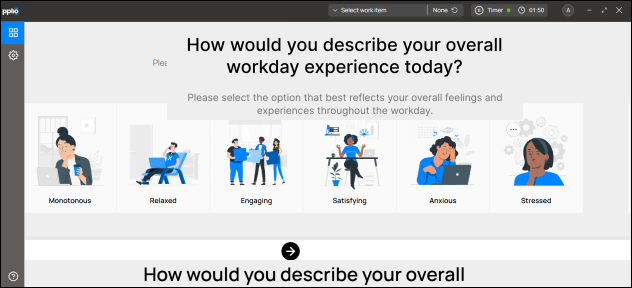
Regular self-retrospection works best when it is simple and continuous, which is why many teams adopt pulse-based self-reflection tools to keep engagement insights fresh and actionable.
Do Employees Stay Engaged While Working From Home?
Employee engagement while working from home depends largely on how supported and connected employees feel. Remote teams stay engaged with clear goals, regular communication, and flexible work-from-home setups.
In fact, fewer interruptions and better control over schedules often improve remote work productivity and employee motivation.Time tracking for remote employees can also play a role in sustaining engagement when used thoughtfully.
Organizations that prioritize work-life balance and adopt a thoughtful hybrid work model tend to see higher engagement levels. When employees feel trusted and equipped to do their best work, working from home becomes a sustainable and engaging way of working.
How to Improve Staff Retention With Engagement
Early signs an employee may be considering leaving often show up as subtle behavior changes—like lower engagement, reduced participation, or a drop in performance and work quality.
Rising absenteeism and withdrawal from team interactions are closely linked to employee turnover. When these patterns go unaddressed, they can impact long-term employee retention.
Paying attention to engagement levels and behavioral signals helps managers respond early and support employees before they decide to leave.
Encouraging employees to reflect on their daily goals can help them see how their work aligns with the organization and supports their own growth.
Using a tool that offers AI-based insights and mentoring can make this process easier, providing personalized guidance and highlighting areas for improvement while recognizing contributions beyond just hours worked.
Paying attention to these factors helps employees feel supported, stay engaged, and increases the likelihood they’ll stick around for the long term.
See how engaged your team is, and grow from it.
Build an environment that keeps employees engaged and connected to their work.