All About Time Tracking - What Works and What Doesn’t
6 min read
When time is not properly tracked, project management often becomes unclear. Teams lack time utilization insights into active, idle, and total time, making it hard to understand where effort is actually going.
Without visibility into task time spent, inefficient patterns like unnecessary task dragging or uneven effort remain hidden, leading to missed performance signals and weak accountability across the organization.
When time is tracked effectively, these gaps turn into clarity and control. Reliable time utilization insights and task-based time tracking support meaningful performance improvement metrics and help optimize the organizational workflow.
With accurate data, managers can take prompt action to resolve bottlenecks, strengthen project management, and maintain accuracy in operations across teams.
How to Track Time Without Micromanagement
Time tracking does not have to feel intrusive to be effective. Non-intrusive time tracking focuses on understanding work patterns rather than monitoring every action, allowing employees to work without constant oversight.
When tracking is designed to support employee trust and autonomy, it shifts from control to clarity, giving teams the freedom to manage their time while staying accountable.
Empower your team with honest data. Not micromanagement
Managers who micromanage create several negative outcomes:
Employee trust is eroded
Overall productivity decreases
The turnover rate for high performers increases
A healthier approach emphasizes outcome-based productivity, where results matter more than hours logged. By adopting ethical time tracking and maintaining transparent tracking practices, organizations clearly communicate what is tracked, why it is tracked, and how the data is used. This transparency builds confidence, reduces resistance, and ensures time tracking supports performance without turning into micromanagement.
Time Tracking for Remote Employees
Tracking time for remote workers doesn’t have to feel rigid or uncomfortable. Imagine a distributed team working across time zones, without clear time tracking for remote employees, it’s hard to know when work actually happens or where time is going. Simple, non-intrusive tracking helps teams log hours naturally while keeping flexibility intact.
This kind of visibility plays a big role in improving remote workforce productivity. For example, when teams can see how long tasks usually take, planning becomes easier and deadlines feel more realistic. It also strengthens accountability at work, not by watching people, but by making expectations and progress visible to everyone.
Successful time tracking isn’t about control—it’s about support. When employees understand why time tracking exists and how it benefits them, adoption becomes easier.
Benefits for employees include - Fair workload distribution, Proof of effort and contribution, Better work-life balance.
Remote work is reshaping the global workplace by prioritizing flexibility, outcomes, and location-independent talent.
Work Time That Fits Into Everyday Work
Consistent time tracking starts with making it effortless. When logging hours feels like a chore, it’s easy to miss entries or have incomplete records. Smart tools that capture work time automatically help employees focus on their work while tracking hours seamlessly in the background.
Taking short, regular breaks helps employees recharge and work smarter within their day. With intuitive time tracking, these breaks are naturally recorded, letting teams stay on top of their hours without any extra effort, so everyone can balance focus and rest while keeping time data accurate.
How to Track Time Spent on Tasks
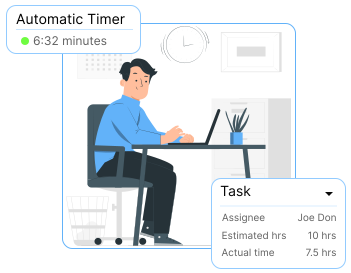
Tracking time spent on tasks becomes easier when you break work down clearly. With granular task-based time tracking, employees log time against specific tasks instead of broad projects, which makes daily work more transparent and easier to manage. It also helps teams understand where effort is actually being spent.
This setup supports required effort duration tracking, making it clear whether someone is working the expected number of hours on a task or if work is being stretched without real progress.
For example, if a manager assigns Person A five hours for a report, task-level tracking quickly shows whether those five hours were actually spent on the task or scattered across other work, making follow-ups objective instead of assumption-based.
If the tool you rely on is equipped with automatic task time tracking, this becomes even easier:
Hours are captured automatically in the background, so employees can focus on their work.
See exactly how much time is spent on each task, making workload and progress transparent.
Helps managers track actual effort versus expected effort, enabling data-driven follow-ups.
Weekly time-sheet automation logs the time spent on each project day by day, giving teams a clear view of effort distribution.
Time Tracking Tools & Privacy Concerns
Privacy concerns are one of the biggest reasons employees resist time tracking, and for good reason.
Many tools rely on invasive practices like collecting raw data through screenshots or keystrokes, which naturally raises employee concerns about privacy. When people feel watched instead of supported, trust breaks down quickly.
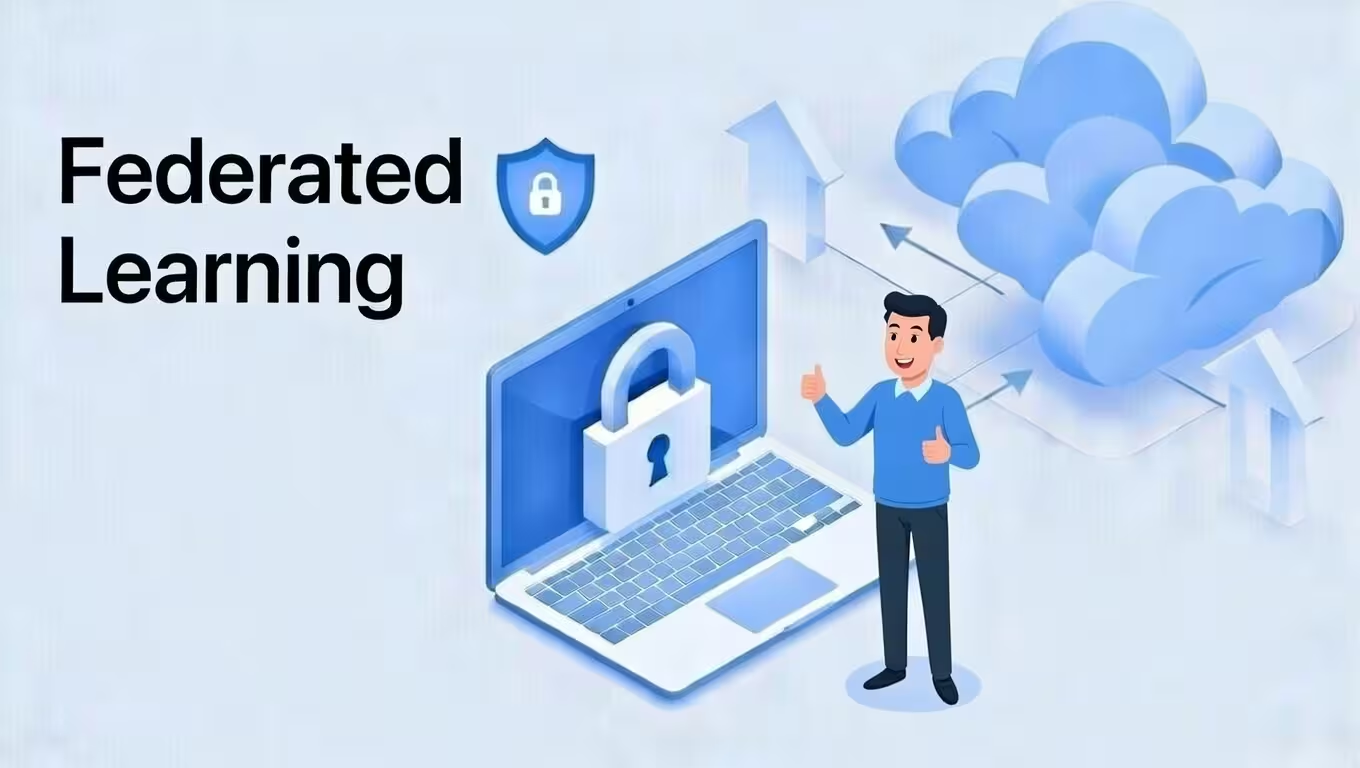
This is where privacy-centered monitoring becomes not just healthier, but more sustainable. Instead of collecting sensitive raw data, modern mitigation techniques like federated learning ensure that raw data never leaves the employee’s device.
Only meaningful insights are shared, not screenshots, not keystrokes, and not personal activity. When employees feel confident about how their data is handled, employee confidence in their data grows. That confidence leads to less resistance, higher acceptance of time tracking, and better engagement overall.
Privacy-first time tracking shifts the conversation from surveillance to trust, making it easier for teams to adopt and benefit from time tracking without compromising autonomy.
Choosing the Right Time Tracker For Your Team
The suitable time tracker for businesses is one that strikes the right balance between visibility and trust. It should honor employee privacy while still meeting organizational requirements such as accurate reporting, accountability, and workflow insights. Tools that rely on invasive monitoring often create resistance and slow adoption, regardless of company size.
Businesses also benefit from the ability to test before commitment. Trying a solution in real working conditions helps teams evaluate usability, impact, and fit without risk. Along with this, affordable pricing ensures the tool remains sustainable as teams scale.Finally, an all-in-one time tracking solution helps reduce overhead by replacing multiple tools used for.
Tracking & Reporting
Productivity Insights
Project Management
Explore pplio's time tracking solution now
Track time effortlessly and gain clear insights into how work gets done.